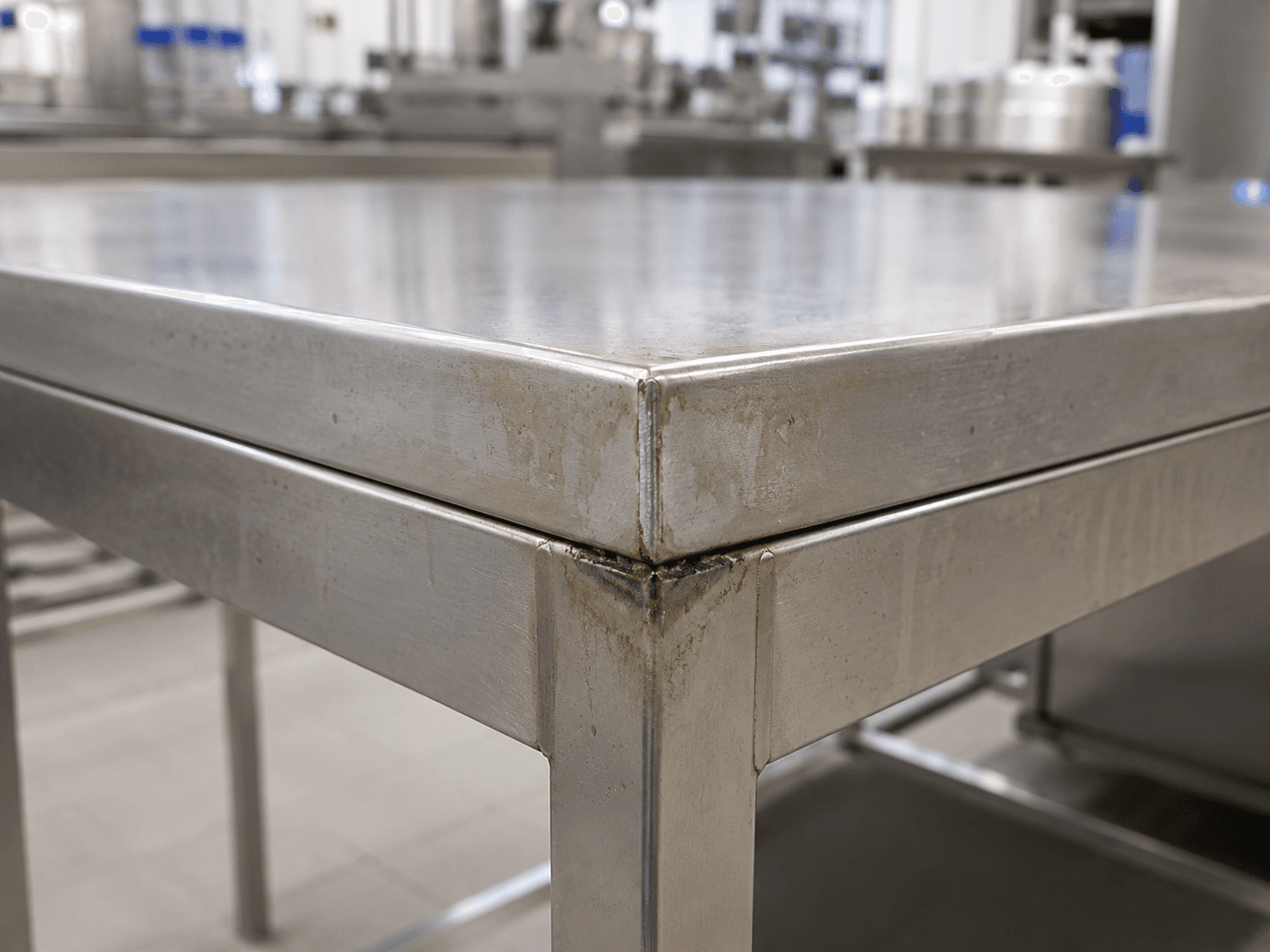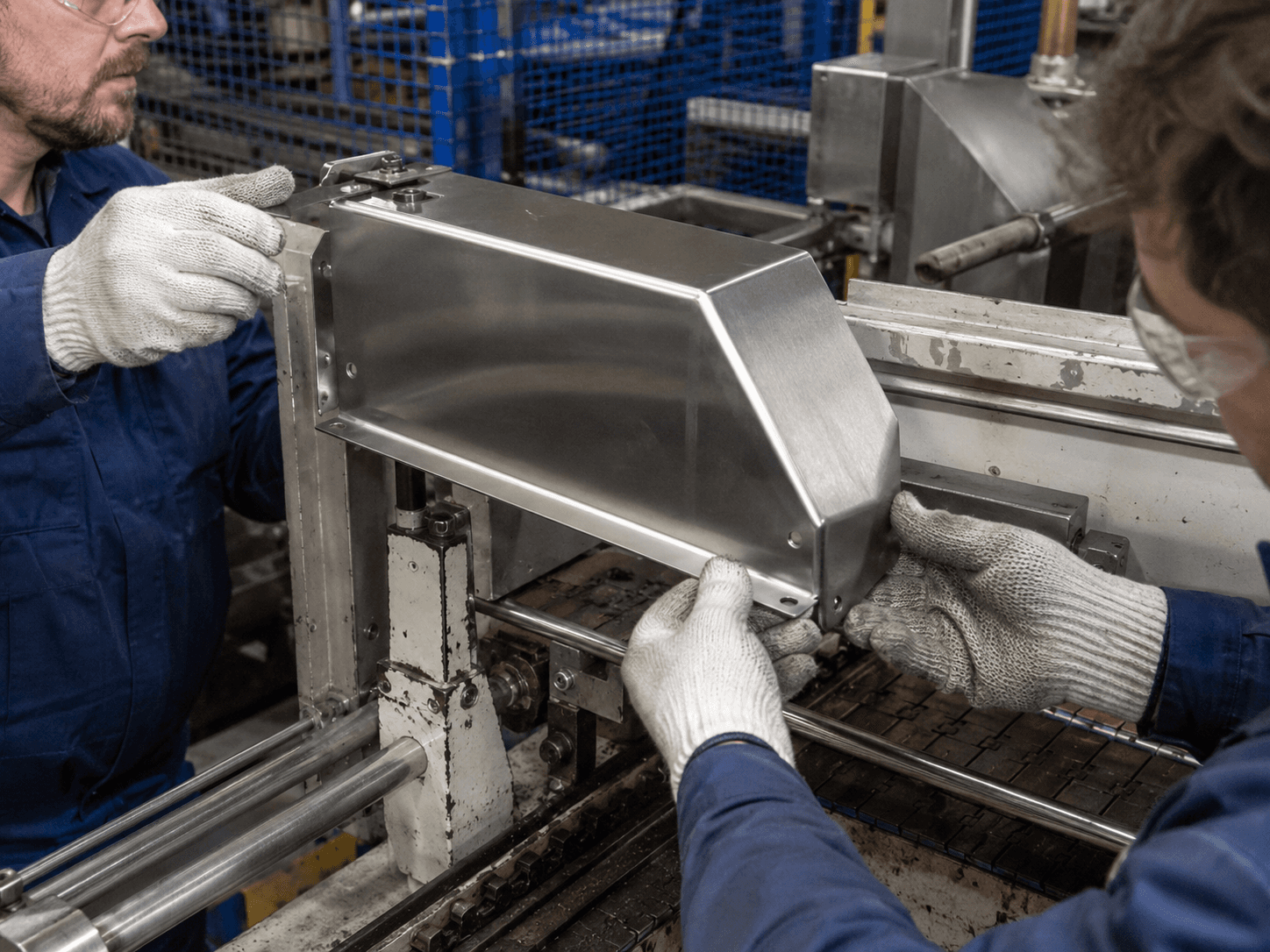
Is a hygiene inspector or audit raising issues with gaps, corners and poor cleaning?
In food and pharmaceutical environments, stainless steel alone is not enough. Details determine cleanability and daily maintenance.
What hygiene-sensitive operations really deal with
Hygienic operations need parts and structures that can be cleaned regularly and reliably. For tables, frames, guards or holders, the question is therefore not only whether the part is made from stainless steel.
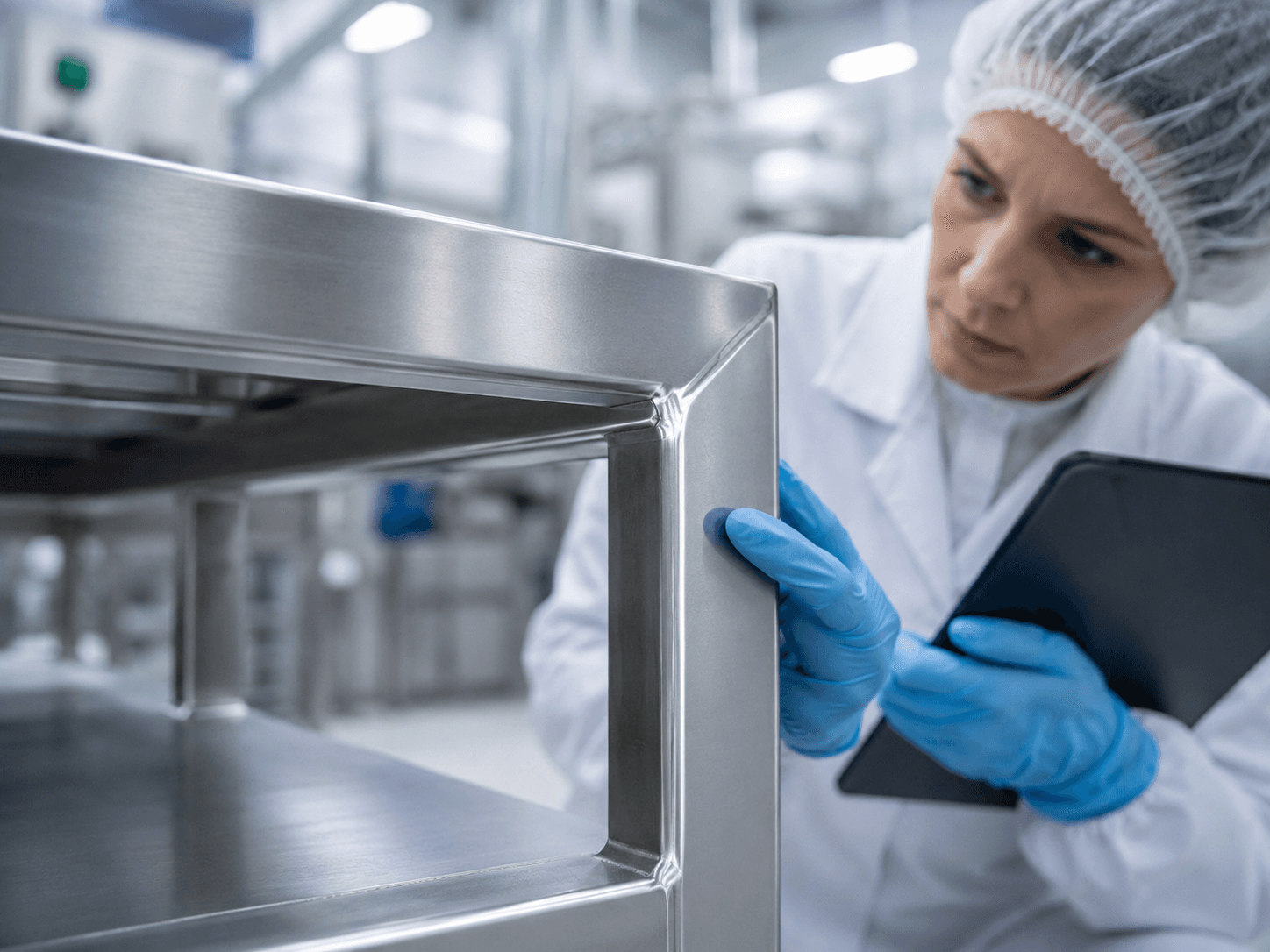
Smooth surfaces, appropriate surface roughness, rounded internal corners, fully filled welds and the absence of hidden gaps or cracks are all important. These are the places where product residue, water and dirt can collect.
A sanitary weld should have continuous geometry, avoid pockets and remain easy to maintain after finishing. If a weld or design creates a hard-to-reach area, the problem often appears during an audit or in daily cleaning.
Welding and design have to work together
The right welding method is only one part of the solution. Hygienic parts must be designed with cleaning in mind: whether the part can be washed, whether water can drain, whether sharp internal corners appear and whether joints can hold residue.
TIG welding is useful for stainless steel hygienic parts when more precise weld control and a clean result are required. After welding, grinding, polishing or another surface treatment may still be needed depending on the operating requirements.
A weld should not be used as an improvised structural fix where the design needs a different solution. A good hygienic part is the result of construction, suitable material, correct welding and practical finishing.
How to prevent these issues when fabricating the part
At AM Welding, we design and fabricate parts so they make sense in operations with demanding hygiene expectations. We choose suitable stainless grades, use precise TIG welding and grind or polish parts when the application requires it.
During design, we also consider how the part will be used, washed and inspected. The result is better audit readiness, lower risk of dirt retention and easier daily maintenance.