Is your stainless steel table rusting or difficult to clean?
The problem is often not stainless steel itself, but how the part was fabricated, welded and finished.
Why problems appear even on stainless steel
Stainless steel is a core material in food, pharmaceutical and technical operations. Its natural corrosion resistance is valuable, but it does not mean that every stainless steel table or frame will remain free of staining, rust marks or difficult-to-clean areas forever.
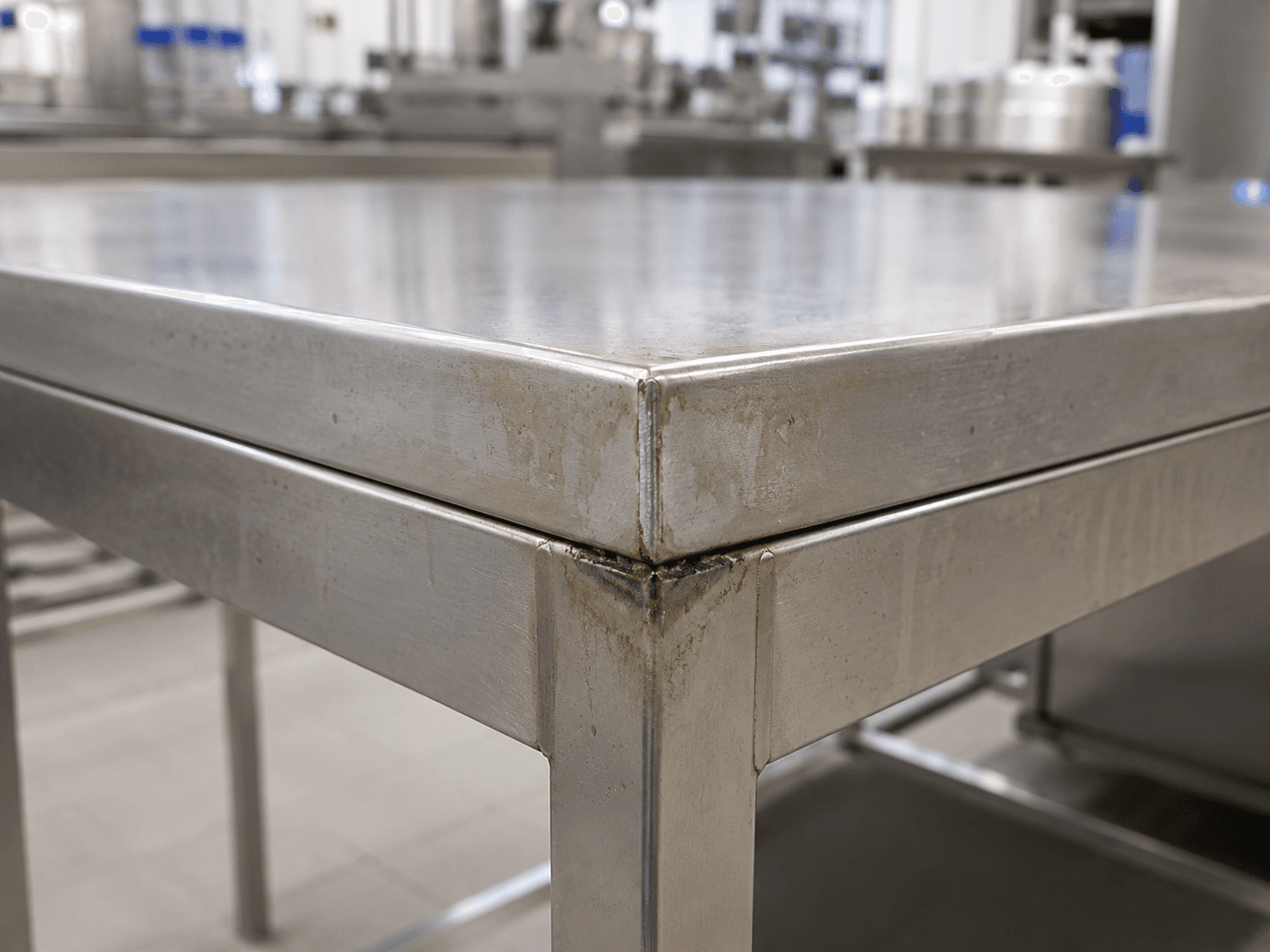
In real production environments, surfaces can develop spots, rough weld scale or places where dirt collects. The cause is often a poor material choice, insufficient surface finishing, surface contamination or a weld that was not properly cleaned after fabrication.
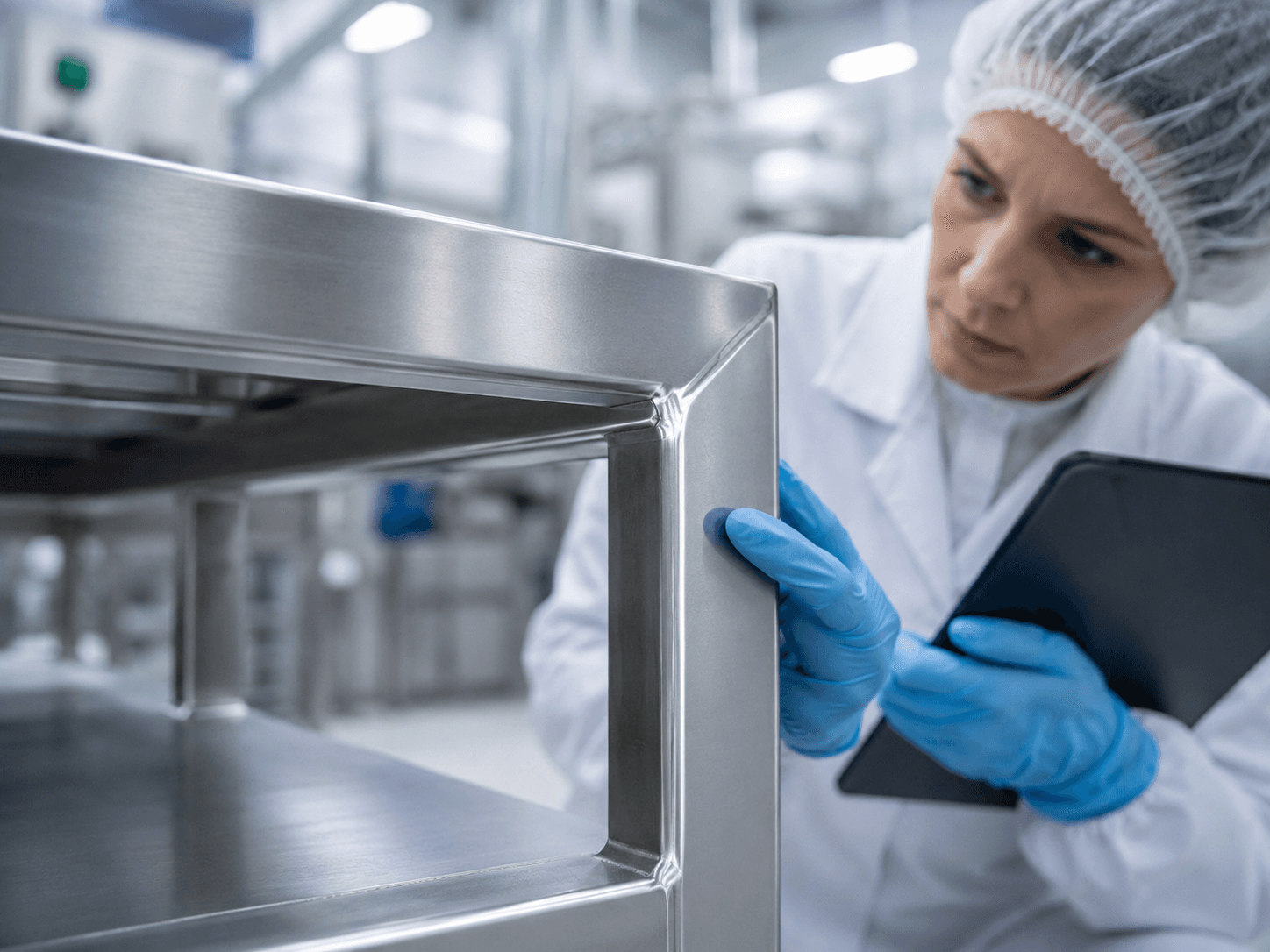
For hygiene-sensitive operations, it is not enough to ask whether a part is made from stainless steel. Cleanability, low surface roughness, absence of cracks and weld geometry all influence whether residue can collect on the part.
The weld affects cleanability and service life
Welds are a critical detail. In hygienic and technical parts, strength is only one part of the requirement. Weld shape and cleanliness are just as important. A sanitary weld should be continuous, without undercutting, depressions or pockets that are hard to clean.
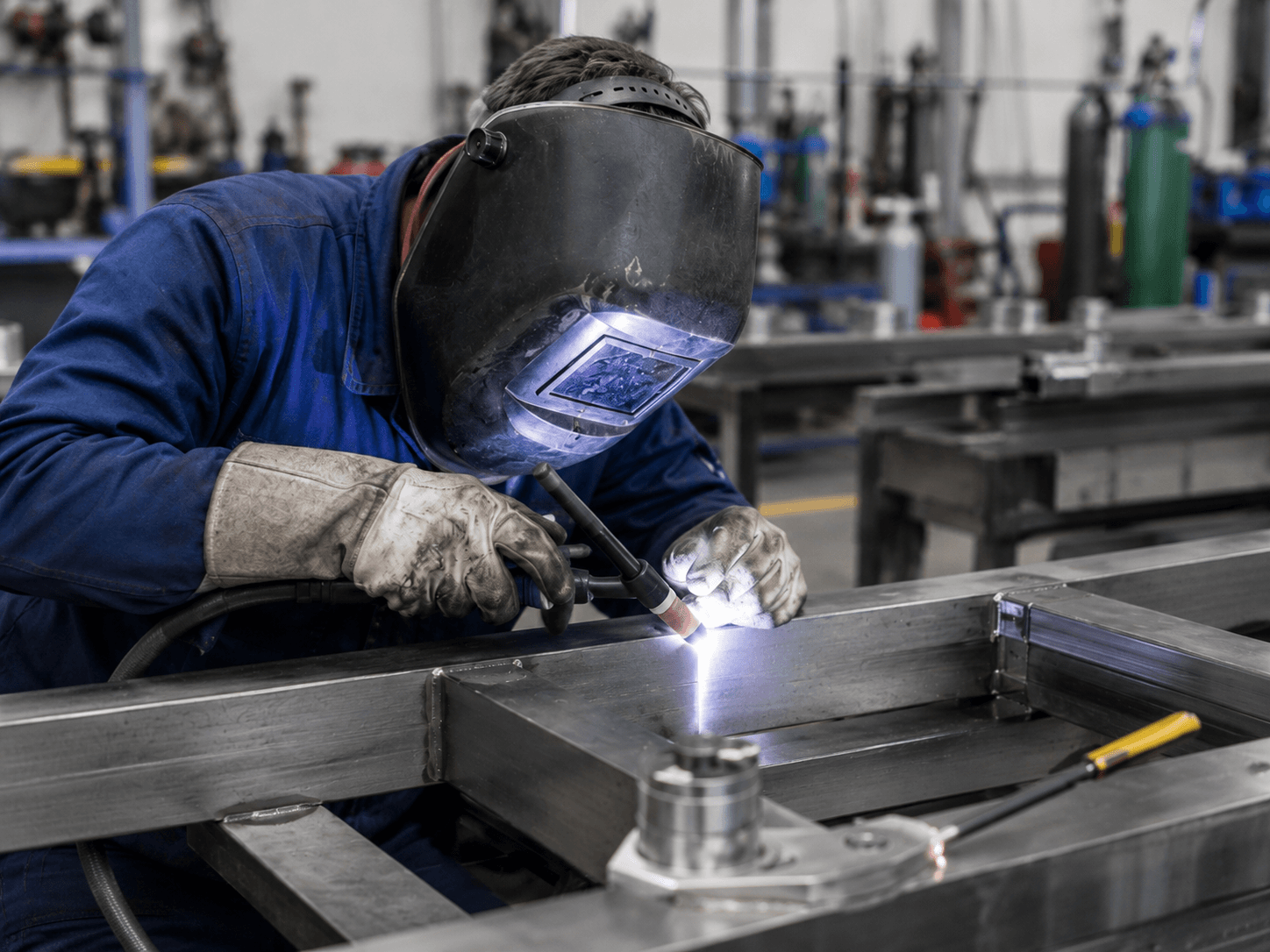
Conventional MIG welding can create spatter, a rougher structure and problematic spots when it is used in the wrong context. TIG welding gives better control over heat input and weld shape, which helps reduce spatter, surface irregularities and risk points.
Even a good weld is not the full solution if grinding, polishing or restoration of the passive layer is neglected after welding. These steps often decide whether the part will remain easy to maintain or begin to deteriorate in operation.
The answer is not always a more expensive material
When a stainless steel part deteriorates, the solution is not automatically a more expensive grade. What matters is the right combination of stainless steel grade, often 304/304L or 316/316L depending on the environment, suitable welding, careful grinding and polishing.
At AM Welding, we first look at the operating environment, cleaning method, type of product contact and expected service life. Only then do we propose a practical solution, whether it is a new table, frame, guard, tank or modification of an existing part.