Do you need to modify a machine, line or workstation?
For custom parts, practical preparation, accurate measurement and technical dialogue before fabrication make the difference.
When a standard part is not enough
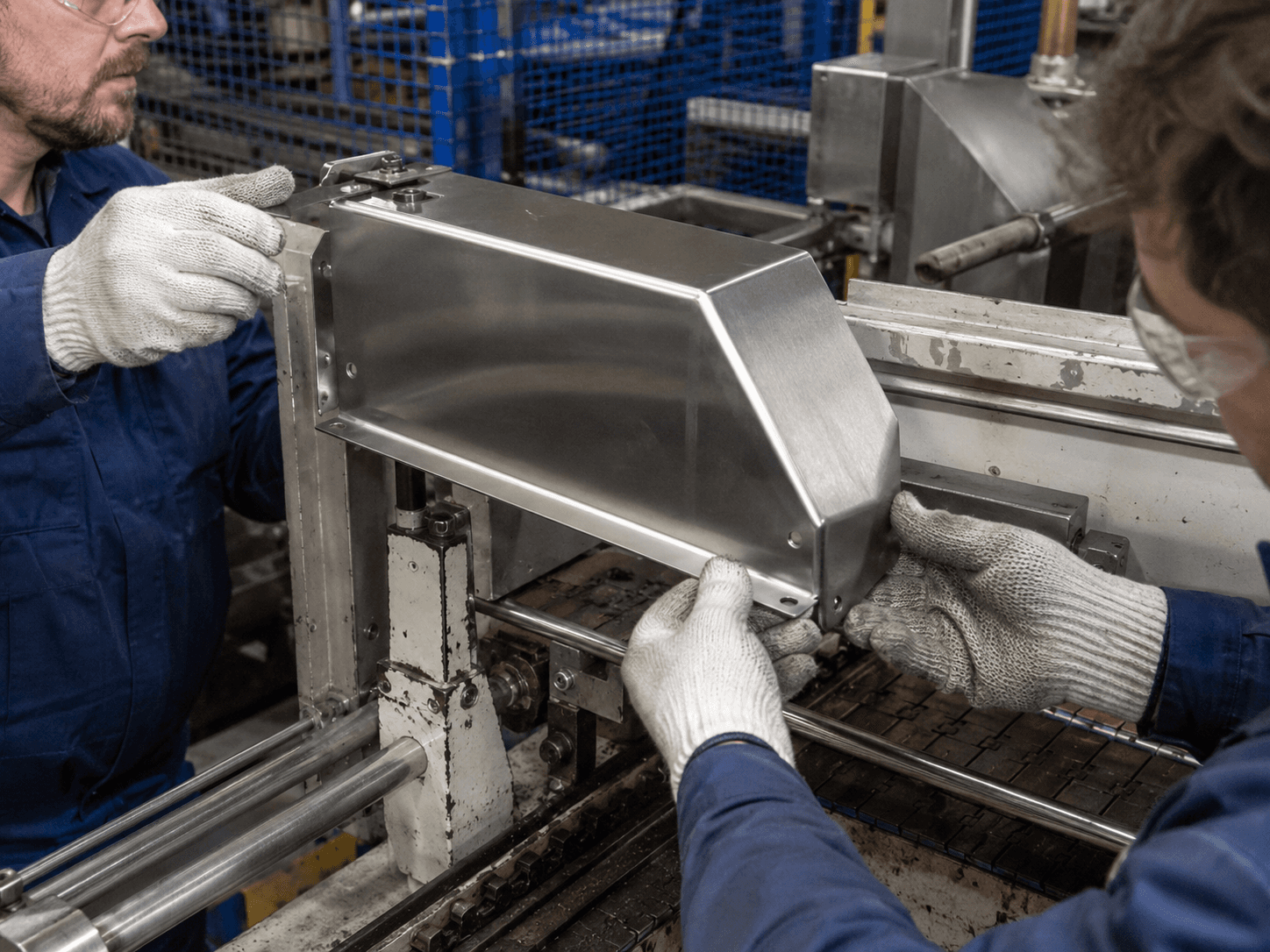
In many production facilities, older equipment still performs reliably, but individual details no longer fit current needs. A new sensor needs a guard, a workstation needs to be completed, a frame needs to be extended, a stop needs to be changed or a stainless steel holder has to be fabricated.
These modifications can sound simple. If the fabricator does not understand the real operating conditions, the result often fails in practice. Holes do not align, installation takes longer, the part interferes with another section of the line and downtime becomes longer than expected.
Tight schedules, material shortages and late design changes are common in manufacturing. That is why a custom part should not be designed only from an incomplete drawing without understanding the actual constraints.
A good part is created through technical dialogue
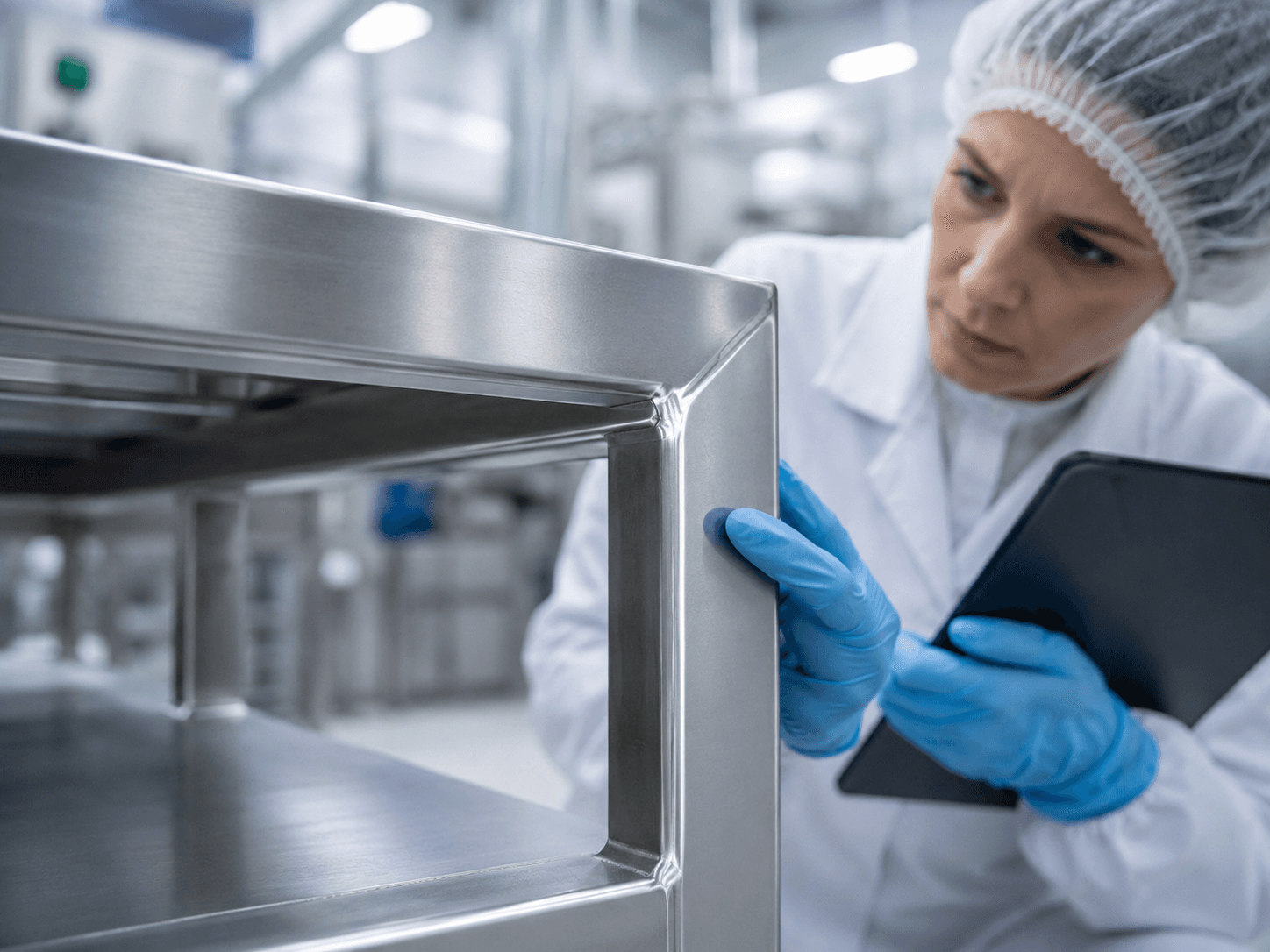
Custom solutions require close cooperation between the fabricator and the client. During preparation, it is important to understand where the part will fit, what load it must carry, how it will be mounted, how it will be cleaned and whether it will limit operation or service access.
Overly strict tolerances or unnecessarily complex geometry can increase cost without improving the result. Sometimes a small change in shape, mounting clearance or fastening method saves hours of fabrication and installation work.
Technical dialogue does not mean slowing the project down. In many cases, it shortens production, reduces rework and prevents unnecessary downtime during installation.
How AM Welding approaches modifications
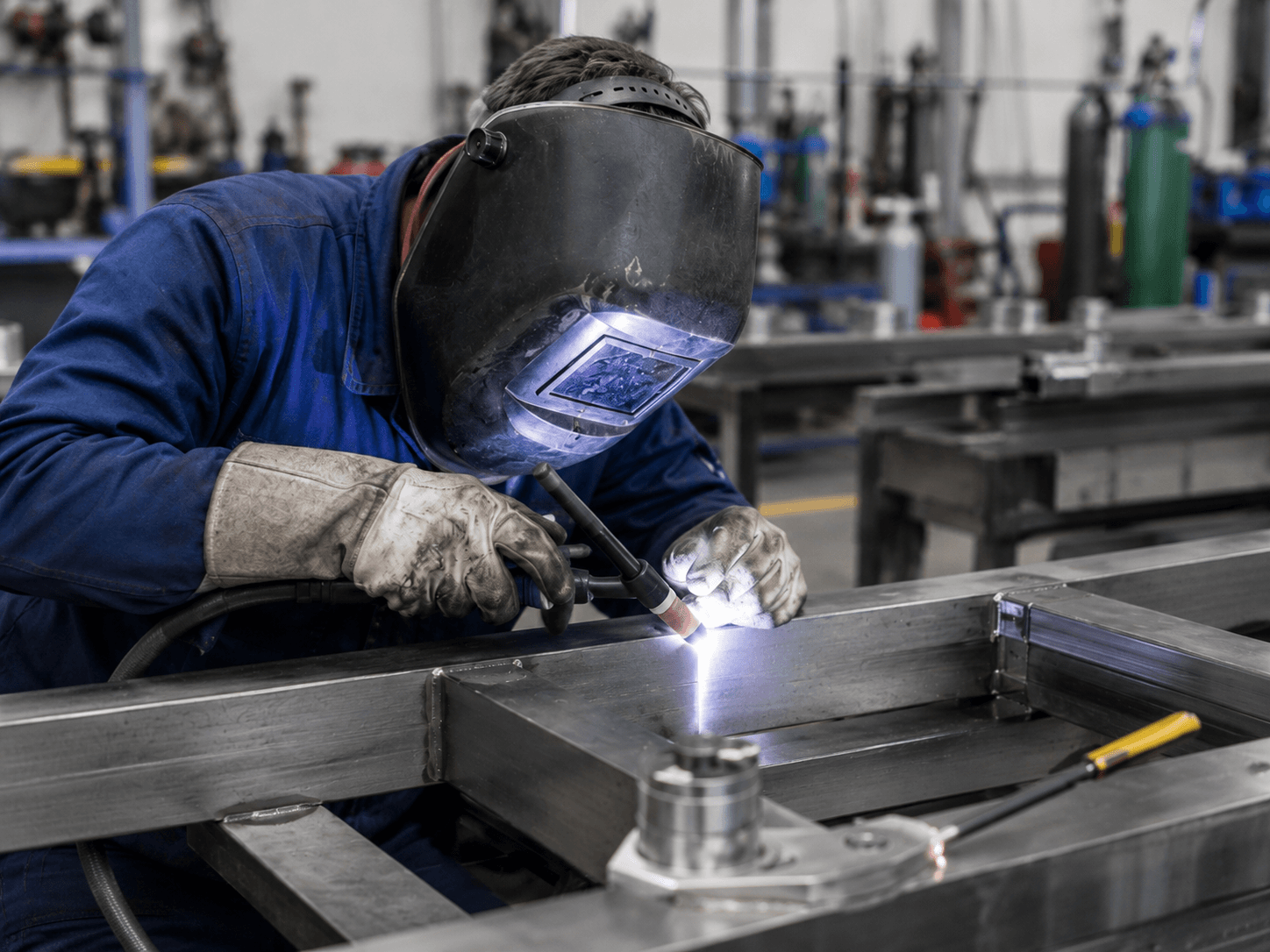
At AM Welding, we treat every custom part as a technical task, not just a dimensioned order. We first understand the problem, measure the existing equipment when needed and propose a solution that can be installed without unnecessary downtime.
The result can be a guard, bracket, stainless steel table, stop, holder, frame or modification of an existing line section. The aim is a part that fits the operation, reduces the risk of rework and helps the technology continue working without replacing the whole machine.