
Cracked, deformed or corroded stainless steel part. Repair it or make a new one?
Not every damaged part belongs in the scrap bin — and not every crack can simply be welded over. The right approach depends on the cause of the damage, material, geometry, operating load and required service life.
In brief
Find the cause first. Weld only after that.
A crack, deformation or corrosion is a symptom. Before repairing it, you need to understand why it occurred.
Repair makes sense when the surrounding material is sound, the damage is local and both the function and surface of the part can be restored.
A new part may be safer and more economical when corrosion is extensive, failures recur or the original design is unsuitable.
Assessment
The visible damage is only the start of the question
When a bracket cracks in operation, a guard becomes deformed or corrosion appears on a stainless steel part, the first reaction is often: ‘Can it be welded?’ The technically better question is: ‘Why did it happen, and what needs to change so it does not happen again?’
A crack may be related to vibration, cyclic loading, local stress concentration, poor support, overloading or an earlier repair. Deformation may result from mechanical impact, thermal stress or insufficient structural rigidity. Corrosion may be a local surface issue, but it can also indicate an unsuitable material grade, contamination, a crevice or an aggressive environment.
If the cause is unknown, welding may remove the visible symptom without solving the real problem. Under repeated loading, the failure can then return — often directly beside the repaired area.
Repair
When a repair can be technically reasonable
A repair has a sound basis when the damage is local and accessible and the surrounding material remains usable. Typical examples include a damaged bracket, a locally cracked weld, the deformed edge of a guard or a part where the defective section can be removed and the original geometry restored without disproportionate intervention in the full assembly.
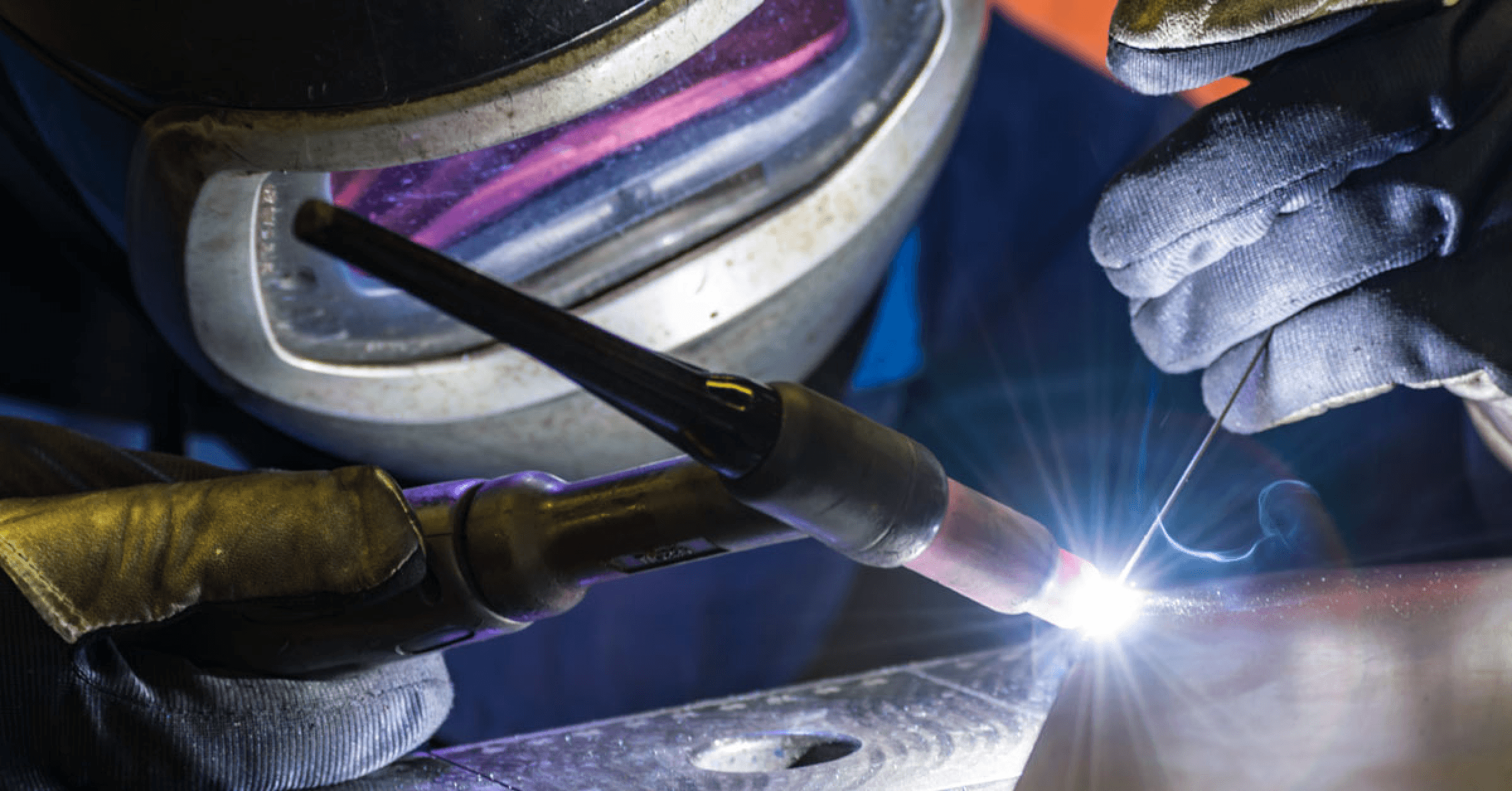
Welding is a common fabrication process for austenitic stainless steels, but preparation, cleanliness, heat input, deformation and filler material still need to be controlled. The original condition of the part also matters during a repair — it may no longer be the same as it was during new fabrication.
- The material and suitable filler material are known or can be verified
- The damage can be fully exposed and prepared for repair
- The surrounding material is not significantly thinned or broadly corroded
- There is access for welding, inspection and subsequent surface finishing
- The repair will not compromise critical dimensions, tightness or assembly geometry
- The cause of the failure can be removed or at least reduced
New part
When repair stops being the right solution
Repair may not be the least expensive option once dismantling, cleaning, determining the extent of damage, straightening, welding, grinding, inspection and reassembly are included. For a simple part, new fabrication can be faster and the result more predictable.
New fabrication also creates an opportunity to correct the original design weakness: change the mounting, thickness, reinforcement shape, weld position or access for cleaning and assembly. The goal is not to reproduce the same failure in new material, but to make a part that better matches real operating conditions.
| Situation | Repair | New part |
|---|---|---|
| Local crack with sound surrounding material | Often makes sense after assessing the cause | Not always necessary |
| Extensive corrosion or significant thinning | Risk of further weak points | Often the more reasonable solution |
| Unknown material and several previous repairs | Greater uncertainty | Provides a clear starting point for material and geometry |
| An unsuitable original detail keeps failing | The failure may return without a design change | Opportunity to improve the design |
| Hygiene-critical area that is difficult to clean | A cleanable surface must be restorable | A new detail can eliminate the original problem |
Finishing
A repair does not end when the arc goes out
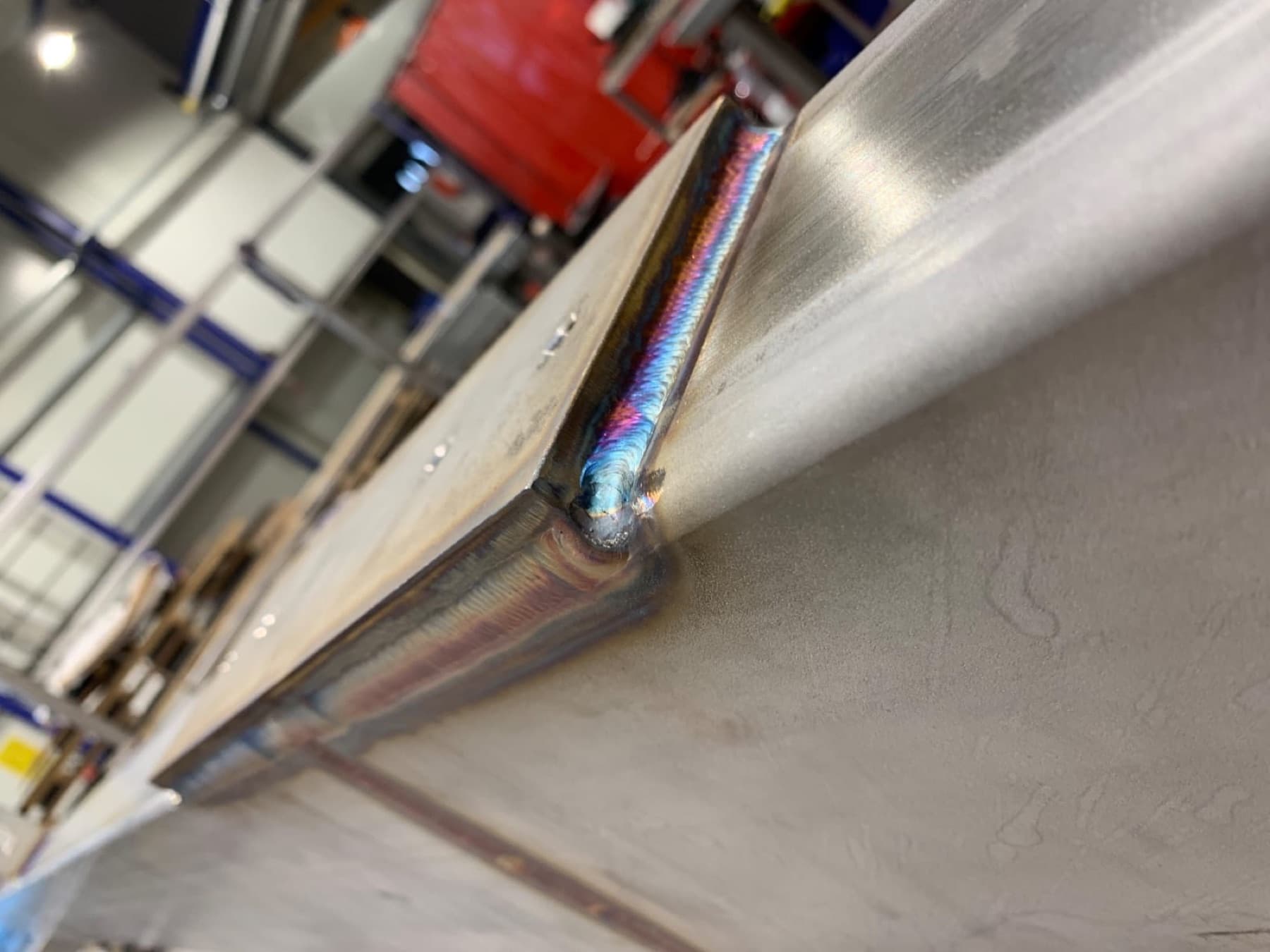
Welding stainless steel changes the surface around the weld. Heat tint is an oxide layer, and more pronounced discoloration can cover an area depleted of chromium. Where corrosion resistance or cleanability matters, suitable cleaning and finishing must therefore be selected.
Brushing alone can remove some surface discoloration and contamination, but it may not remove the entire altered layer beneath the oxide. Mechanical, chemical or electrochemical finishing is therefore selected according to the required result. Tools intended for stainless steel are also important so that the surface is not contaminated with carbon steel particles.
Geometry is checked during the repair as well: whether the part remained straight, still fits the original assembly and has not developed a new problem because of welding heat. Stainless steel has greater thermal expansion than standard carbon steel, which makes deformation control important for thinner parts and longer welds.
Interactive guide
What happened to the part?
Choose the issue that most closely matches the real situation. The result is indicative — the final decision depends on the material, function and extent of damage.
Crack
A crack or damaged weld
First determine the full extent of the crack and why it formed. If the surrounding material is sound and the cause can be removed, a local repair may be effective.
- Photograph the detail and the entire part
- State whether the area is loaded or exposed to vibration
- Provide the material and details of previous repairs
Deformation
The part is deformed
It is necessary to assess whether the geometry can be restored without excessive thinning, new stresses or damage to functional surfaces. For simple geometry, a new part may be more economical.
- Measure the deviation from the original shape
- Explain how the deformation occurred
- Check mounting and sealing surfaces
Corrosion
Corrosion has appeared
The key question is whether this is a local surface defect or more extensive material damage. The environment, cleaning chemicals, temperature and location of the corrosion need to be known.
- Photograph the extent of the corrosion
- Specify the medium and cleaning agents
- Assess crevices, standing water and contamination
Checklist
What to send for a repair assessment
Mark the information that is already available. Not everything has to be known — AM Welding can start with photographs and a practical description of the problem.
Photographs and a brief description of the problem are enough to begin the first assessment.
Proof of work
Real workmanship helps with the decision
AM Welding handles custom fabrication, piping parts, technical assemblies, installations and repairs in stainless and carbon steel. For a similar project, it is therefore useful to review completed work and weld details — especially when precision, surface quality or the finishing method is important.